FIRE FIGHTING SYSTEMS EN 12845
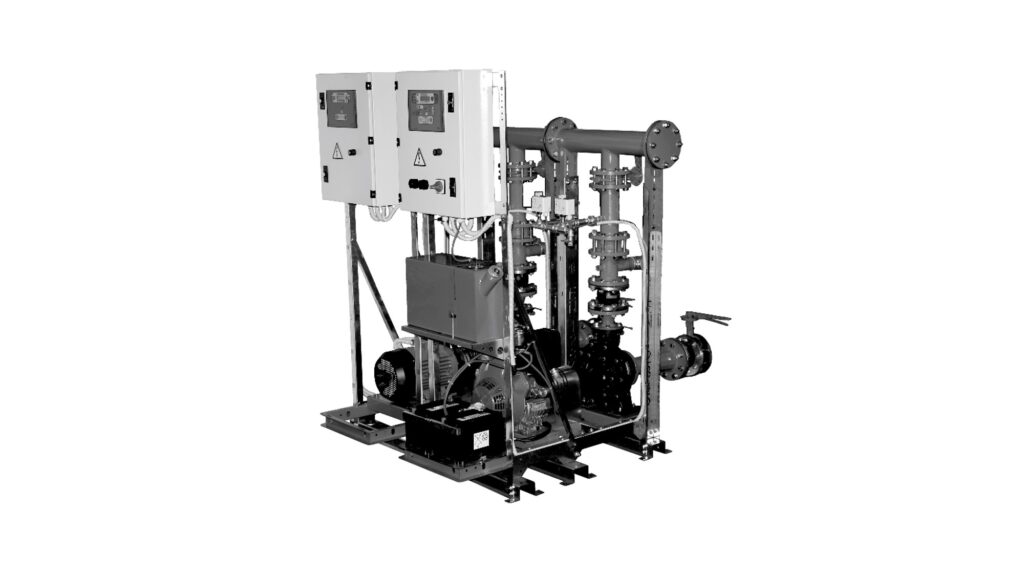
EN733 back-pull-out-pumps with stable H (Q) curve.
Eccentric cone on the suction side of the duty pumps.
Two control pressure-switches for each pump, con-nected to the pressure side by means of a 15 mm diameter fitting (10.7.5.1).
Provided with a 2’’ (50) mm fitting to connect an au-to-priming tank (10.6.2).
Bypass flow connections to avoid overheating of the pump in the event of operation at shut off and/or flow for cooling the diesel engine properly regulated.
Equipped with a connection for feeding the sprinkler circuit protecting the installation room (10.3.2).
Factory set pressure-switches (10.7.5.2).
Availability of remote alarm signaling unit (10.8.6.2) with siren and suitably colored signaling lamps (10.8.6.3).
Muffler with silencer (10.9.5) always supplied with the diesel engine.
Jockey pump build-in so as to avoid accidentally starting of the duty pumps.
Supplied with pre-charged pressurizing tanks for smooth jockey pump operation.
Relevant flow rates stated beside the duty perfor-mance of the pumping set (10.5).
Operating conditions of the duty pumps fully displayed by the control panel (10.8.6.1).
The signals of the operating conditions can be entire-ly remotized (10.8.6.2).
Adequate capacity of diesel tank (10.9.6).
Indication of a 25% drop in the level of the fuel (Appendix H 2.4).
Diesel driven pump control panel powered simultane-ously by two batteries(10.9.7.2).
Automatic exclusion of a damaged battery in order to prevent spoiling the other one. (10.9.7.2).
One dedicated battery charger for each battery to ensure operational reserve(10.9.9).
Controlled-recharge battery charger for steady per-formance and long battery life (10.9.9).
Kit of spares for diesel engines as mentioned by the standards (10.9.12) available on request.
Suppression dampers on each side of the main pumps.
Shock absorbers between every pump set and the anchoring frame.
Metal fuel lines and tank.
Suction diameter is calculated for less than 1,5m/sec velocity (in suction lift conditions) while the outlet re-mains under 3m/sec at the maximum design flow.
DETAILS
- The protection of lives and property is the main objective of fixed fire fighting equipment, within which pumping equipment has a major role in ensuring a supply of suficient flow and pressure.
- A long experience in the manufacture of fire-fighting equipment has allowed its standardization applying the current CEPREVEN RT1-ROC // UNE EN-12845 standard Technical rules generally demanded by insurance companies. They apply to fire fighting systems with automatic sprinklers.
- These rules specify requirements for the design, installation and maintenance of fixed sprinkler systems.
- This equipment allows a greater flexibility of solutions and alternatives for the protection of people, buildings and stored material.
- The pumping groups must be manual and automatic, while the stop can only be manual.
- All these systems require a pressurized water network for their operation.
- The fire-fighting equipment will maintain the pressurised network, for which they have a small auxiliary pump called a jockey, driven by an electric motor that replaces any possible leaks and drips that may occur in the installation. A small hydropneumatic reservoir helps reduce the number of starts and cushions pressure fluctuations. The overall design of all the equipment is ready for automatic fire service, not admitting other uses.